What if an iconic brand could stretch beyond its flagship product?
In short
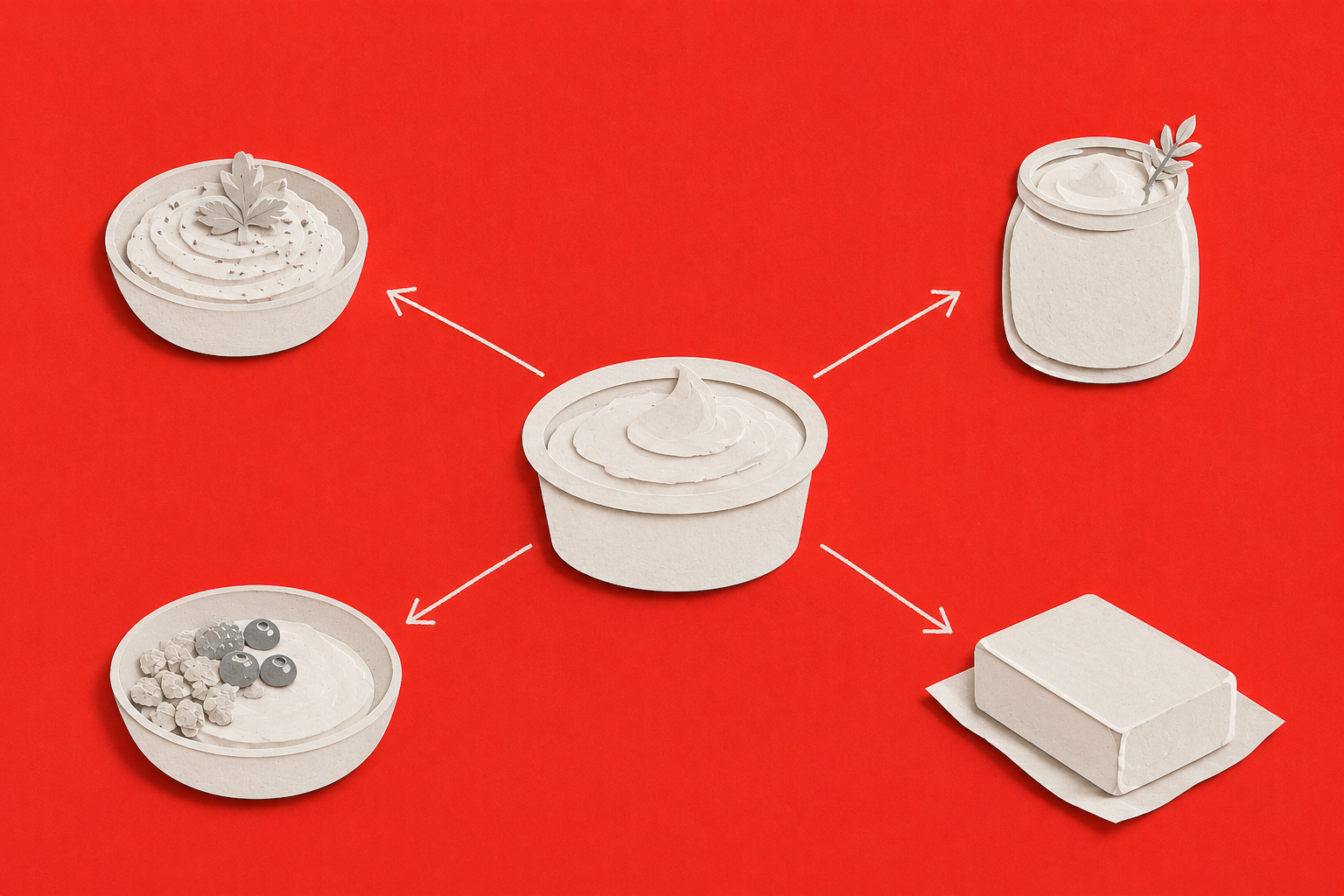
An iconic American dairy brand wanted to explore whether its trust and equity could stretch into new product spaces. Qlue activated existing research, identified 5 opportunity spaces, validated them with real consumers, built 26 digital twins, and shaped 3 strategic product platforms — all in under three weeks.

Challenge
An iconic dairy brand had deep consumer trust, strong awareness and a clear association with its core product format - cream cheese. The question was whether that trust could stretch into new product spaces, and if so, which directions had the strongest logic (consumer, category, brand and business) behind them.
Available assets
Every Qlue project starts by looking at what the brand already has available. In this case, the client did not have a data availability problem. It had a data relevance problem: years of useful intelligence existed, but it was scattered across teams, studies, formats and timelines.
Qlue worked with 30+ existing sources, including consumer research reports, brand trackers, concept tests, co-creation outputs, cultural and trend documents, internal strategy material, 3-year plans, R&D priorities, category data, retail data, market share inputs and competitive landscape material.
The work also brought in cultural and category context, including health and wellness shifts, GLP-1 impact and dairy aisle dynamics.
Alongside this archive, fresh consumer co-creation was added. This was not treated as a separate research phase starting from zero. It was designed around the opportunity spaces Qlue had already surfaced from the intelligence layer.
Our approach
Built a connected intelligence layer
Qlue ingested the brand’s existing knowledge across consumer research, category reports, concept tests, cultural trends, retail inputs, market share data, R&D priorities and internal strategy documents. Instead of summarising each source separately, the platform connected them into a single queryable intelligence layer.
Ran cross-source analysis
Qlue analysed the full body of evidence through 9 strategic lenses, looking for tensions, occasions, formats, demand spaces, white spaces, edge cases and boundaries. Each opportunity was tested against key strategic dimensions: brand permission, category dynamics, consumer validation, occasion fit and business strategy.
This produced 5 opportunity spaces, each with supporting evidence, contradictions and confidence gaps.
Added consumer co-creation
A partner agency then ran consumer co-creation sessions across the 5 opportunity spaces. Real consumers explored needs, format preferences and occasion distinctions, helping ground and deepen the territories that had emerged from the intelligence layer.
Layered qualitative input back onto the intelligence layer
Qlue mapped the co-creation findings back onto the original analytical framework. Where existing intelligence and fresh qualitative input converged, confidence went up. Where they diverged, the team got a sharper view of risk, stretch and uncertainty.
This helped refine the 5 opportunity spaces into 3 strategic product platforms.
Generated and tested ideas with digital twins
Qlue built 26 digital twins from actual co-creation participants, loaded with data from both rounds of qualitative research. These twins were grounded in real consumer language, motivations, behaviours and barriers.
Each twin generated product ideas across the 3 platforms, and those ideas were then cross-tested with the full twin panel. In all, 36 concepts were evaluated and ranked by consumer demand and strategic strength.
Turned the work into platform recommendations
Throughout the process, human strategic judgement remained central. Qlue expanded the field of possibilities, but strategists shaped the questions, interpreted the evidence, merged or discarded territories, and decided what deserved to become part of the final recommendation.
Outcomes
A clear innovation architecture
The work produced a structured innovation architecture for how the brand could stretch beyond its core product format, without losing credibility.
Five opportunity spaces identified
Qlue helped move from broad opportunity mapping to 3 focused product platforms, each grounded in consumer need, brand permission, category logic and business strategy.
36 ranked concepts across the platforms
The team received ranked MVP product line-ups across the 3 platforms, with recommendations on formats, flavour directions, claims, packaging cues and go-to-market implications.
Faster movement from exploration to action
A process that would traditionally require multiple sequential research phases over 8–12 weeks was compressed into under three weeks, while still being grounded in consumer evidence, fresh qualitative input and strategic review.
The work gave the client enough conviction to move forward. The recommended directions were shared with leadership, and the strength of the output led to two additional innovation briefs.